
Doornkop Fish and Wildlife Reserve is home to a remarkable diversity of wildlife, including a variety of snake species. While many residents and visitors share the habitat peacefully with these reptiles, understanding which snakes are venomous, which are harmless, and how to respond in the unlikely event of a snakebite can make a critical difference in safety and awareness.
A Variety of Snakes, From Harmless to Venomous
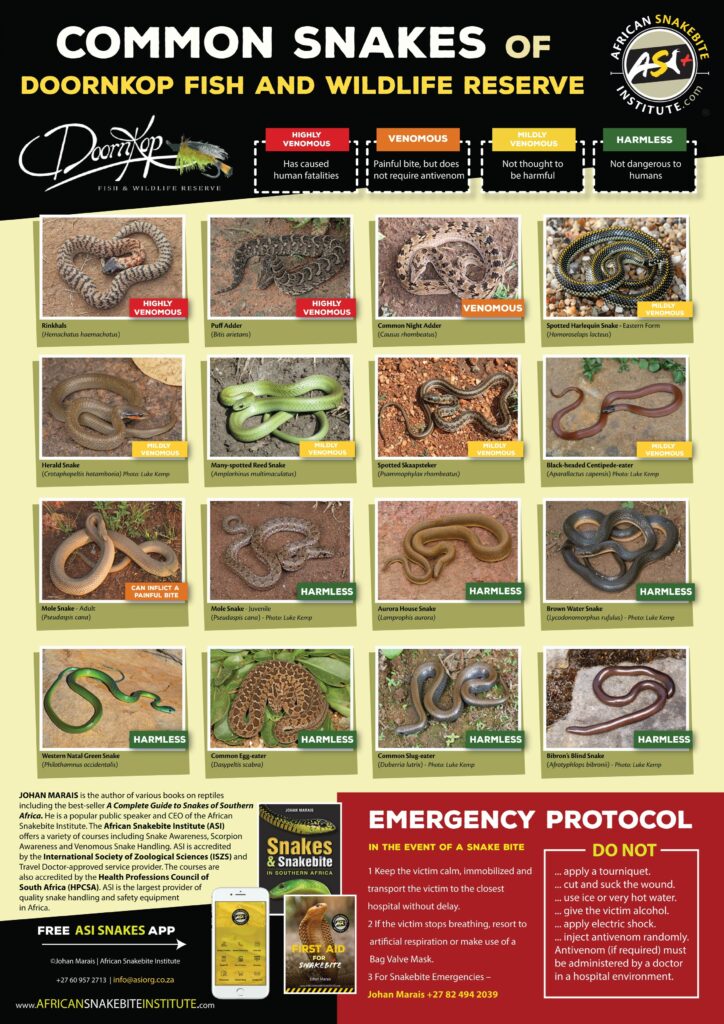
Snakes form an important part of the ecosystem by controlling rodent populations and fitting into the food web balance. At Doornkop and throughout southern Africa, snake species vary in their venom potency and behaviour. The African Snakebite Institute (ASI) categorises snakes into groups based on how dangerous they are to humans, from harmless to highly venomous, with corresponding photos and identification cues.
Some commonly encountered snakes at Doornkop include:
- Highly Venomous Species: These snakes possess venom capable of causing serious harm or even death if untreated. Examples include puff adders (Bitis arietans) and certain cobras (Naja species).
- Venomous but Less Dangerous: Some snakes can deliver venom that causes significant pain and swelling but is unlikely to be fatal with prompt medical care.
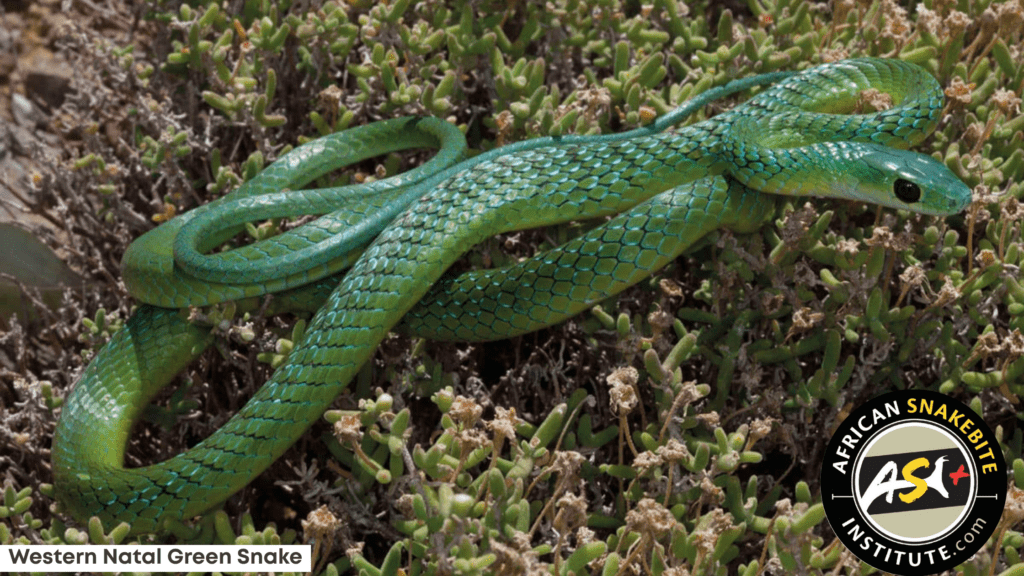
- Mildly Venomous or Harmless: Many local snakes, such as reed snakes or certain water snakes, pose little to no danger to humans. Their bites, if they bite defensively, usually cause only minor irritation.
It’s important to note that identifying snakes based solely on colour or pattern can be misleading; even experienced observers rely on multiple features such as head shape, body form, habitat and behaviour.
Why Snakes Are Found in Wildlife Reserves
Snakes thrive where there is food and shelter. Wetlands, grasslands and rocky outcrops at Doornkop provide ideal conditions for both prey and snake species. Snakes are ectothermic (cold-blooded), so they regulate body temperature by sunning themselves on rocks or seeking shade under cover, particularly during the warmer months. Encounters peak in spring and summer when snakes are most active after periods of rain.
The reserve’s commitment to biodiversity means allowing these reptiles to occupy their natural ecological niche. Most snakes prefer to avoid humans and will retreat if given the space.
Understanding Snakebite and First Aid
Although snakebite incidents are rare, it is vital for visitors and staff to understand appropriate emergency responses. In South Africa, snakebite cases are managed using well-established first-aid principles, and fatalities are uncommon with prompt medical care.
If a snakebite occurs:
- Move Away from the Snake: Keep a safe distance to avoid additional bites.
- Keep the Victim Calm: Panic increases heart rate, which can speed up venom absorption.
- Avoid Old-Wife Remedies: Do not cut the wound, try to suck out venom, apply a tourniquet, ice, heat, electric shock or alcohol — these methods are ineffective and can worsen the injury.
- Transport to Hospital Quickly: Get the victim to the nearest medical facility with trained staff. Antivenom should only be administered in a hospital setting by medical professionals.
The priority of first aid is stabilisation and safe transfer. Symptoms can vary—some venom types affect nerve function, leading to breathing difficulties, while others cause local tissue damage, swelling, and pain.
Prevention Is Key
The best strategy in snake country is avoidance. Wear sturdy shoes on trails, step carefully over logs or rocks where snakes may rest, and give any snake you see plenty of space. Snakes are often more frightened of humans than we are of them and will slither away rather than confront you.
Doornkop encourages visitors to appreciate snakes from a safe distance and view them as important wildlife rather than pests. Learning about local species, their habits and seasonal patterns, enhances respect for the natural environment and reduces the likelihood of accidental encounters.
A Balanced View of Snakes in the Reserve
Snakes at Doornkop reflect the biodiversity of the region, and many species pose no threat to humans. By understanding which ones are dangerous, how to behave around snakes, and what to do in the event of a bite, visitors can enjoy the reserve safely and confidently.
At its heart, wildlife conservation includes educating people about coexisting with all creatures, even the scaly ones.